
How Thermal Imaging Technology Is Transforming Modern Security?
I’ve watched security technology evolve dramatically over my years in this industry. But nothing has changed the game quite like thermal imaging. Traditional cameras leave you blind in darkness and bad weather. That’s when most security breaches happen.
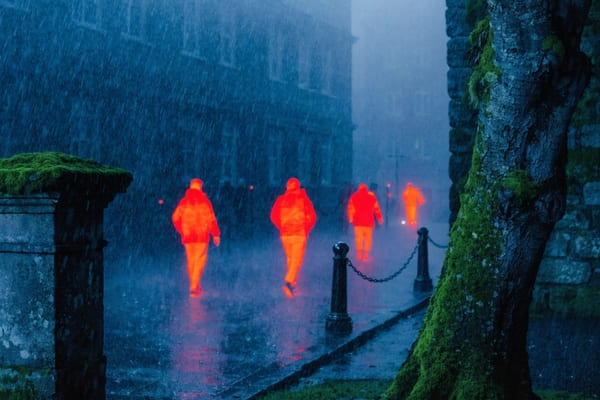
Thermal imaging technology detects heat signatures instead of visible light, allowing security systems to work 24/7 in complete darkness, fog, smoke, and challenging weather conditions. This technology provides reliable detection at longer distances compared to traditional cameras, making it essential for perimeter protection, border security, and critical infrastructure monitoring.
I remember when a client called me at 2 AM. His warehouse had been broken into for the third time that month. His conventional cameras captured nothing useful. After we installed thermal imaging systems, he never faced that problem again. Let me show you why this technology is becoming the backbone of modern security.
How Thermal Imaging Works in Security Systems?
Most people think thermal cameras see heat like we see colors. That’s not quite right. These cameras detect infrared radiation1 that all objects emit based on their temperature. The warmer an object is, the more radiation it gives off.
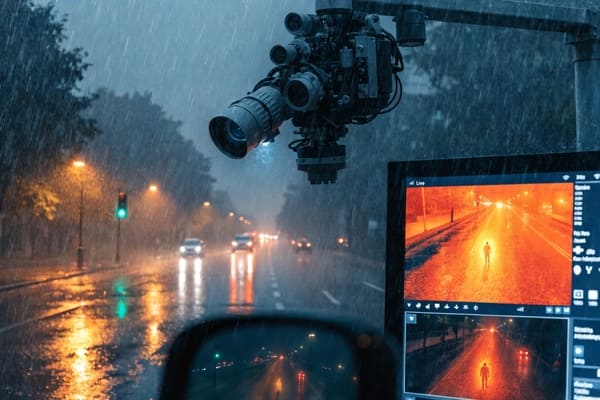
Thermal imaging cameras convert infrared radiation into electrical signals, which are then processed into visible images on your monitor. Every object above absolute zero emits this radiation, making detection possible regardless of lighting conditions. The camera assigns different colors or shades to different temperature ranges, creating a thermal map of your surveillance area.
The Technical Process Behind Thermal Detection
The technology uses special sensors called microbolometers2. These sensors change electrical resistance when infrared radiation hits them. Here’s what happens step by step:
First, infrared radiation passes through the camera’s lens. This lens is made from germanium, not regular glass. Glass blocks infrared radiation, so we need special materials. Second, the radiation hits the microbolometer array. Each tiny sensor in the array measures temperature at one point. Third, the camera’s processor converts these measurements into an image. Fourth, the system displays this image on your screen in real-time.
| Component | Function | Why It Matters |
|---|---|---|
| Germanium Lens | Allows infrared radiation to pass through | Standard glass blocks the signals we need |
| Microbolometer Array | Detects temperature differences | Creates the detailed thermal image |
| Image Processor | Converts heat data into visible images | Makes the information usable for security staff |
| Display System | Shows the thermal map | Enables real-time monitoring and response |
The sensitivity of these systems is remarkable. Modern thermal cameras can detect temperature differences as small as 0.05 degrees Celsius. This means a person hiding behind bushes shows up clearly because their body temperature differs from the surrounding environment. I’ve tested systems that could spot an intruder from over 1,000 meters away in total darkness.
One critical aspect many people overlook is the refresh rate3. Security thermal cameras update their images 30 to 60 times per second. This smooth video feed helps operators track moving targets effectively. Cheaper systems with slower refresh rates create choppy video that can miss important details.
Key Advantages Over Traditional Night Vision?
I often get asked about the difference between thermal imaging and night vision. Many people use these terms interchangeably, but they’re completely different technologies. This confusion has cost businesses money when they chose the wrong solution.
Traditional night vision amplifies existing light to create visible images, requiring some ambient light to function. Thermal imaging detects heat radiation and works in complete darkness without any light source. This fundamental difference makes thermal imaging more reliable for security applications4 where lighting conditions vary or visibility is intentionally obscured.
Performance in Challenging Conditions
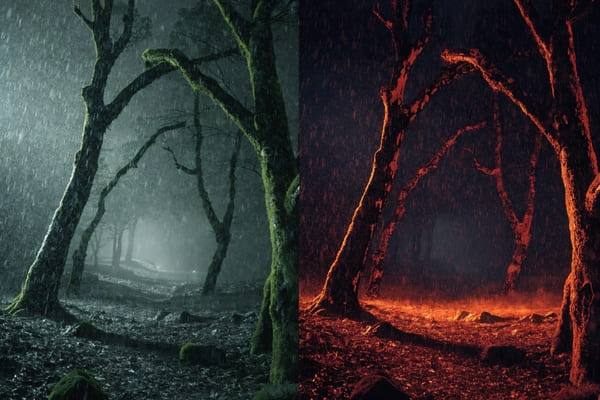
Night vision fails when there’s no light to amplify. It also struggles with bright lights that can overwhelm the sensors. I’ve seen security teams lose visibility because someone shone a flashlight at their night vision camera. Thermal imaging doesn’t have this weakness.
Weather creates another major difference. Fog, smoke, and light rain severely reduce night vision effectiveness. These conditions scatter the light that night vision needs. But thermal imaging cuts through most of these obstacles. Heat signatures pass through light fog and smoke that would blind conventional cameras.
Here’s a real example from my experience. A port facility needed to monitor their perimeter during all weather conditions. They initially installed night vision systems. During foggy nights, which were common in their coastal location, the cameras became almost useless. After switching to thermal imaging, they maintained full visibility regardless of weather. The investment paid for itself within six months through prevented theft and reduced false alarms.
| Feature | Traditional Night Vision | Thermal Imaging |
|---|---|---|
| Light Requirements | Needs ambient light or IR illuminator | Works in total darkness |
| Weather Performance | Poor in fog, smoke, rain | Effective in most weather conditions |
| Detection Distance | Limited by light conditions | Consistent long-range detection |
| Camouflage Effectiveness | Can fool the system | Detects heat regardless of visual camouflage |
| Cost | Generally lower initial cost | Higher upfront investment |
| Maintenance | Moderate | Lower due to fewer environmental impacts |
The detection range advantage is substantial. A quality thermal camera can identify human-sized targets at distances three to four times greater than night vision under the same conditions. This means you need fewer cameras to cover the same area, which can offset the higher initial cost per unit.
Another advantage I always highlight is the reduced false alarm rate5. Traditional motion detection systems trigger on shadows, animals, and blowing debris. Thermal systems can be programmed to ignore small heat signatures and only alert on human-sized or vehicle-sized targets. One of my clients reduced their false alarms by 85% after switching to thermal detection.
Real-World Applications in Border and Perimeter Security?
Theory is nice, but real results matter more. I’ve deployed thermal imaging systems across multiple security scenarios. The technology proves itself time and again in protecting critical assets and borders.
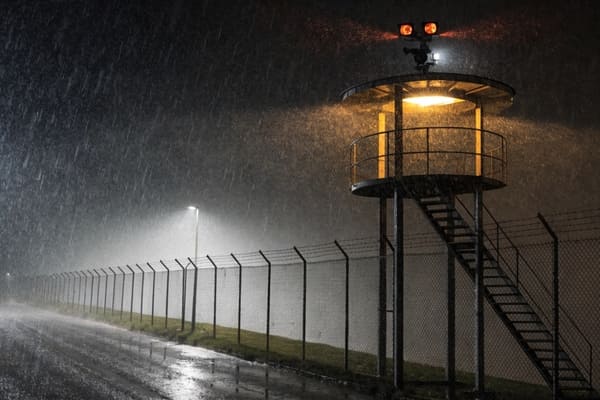
Border and perimeter security represents the primary application for thermal imaging technology, where the ability to detect unauthorized crossings in darkness and poor visibility is critical. These systems provide continuous surveillance6 over long distances, automatically detecting human and vehicle intrusions while minimizing false alarms from wildlife and environmental factors.
Border Control Implementation
Border agencies face unique challenges. Illegal crossings typically happen at night or during bad weather when detection is hardest. Borders span hundreds or thousands of kilometers, making complete physical barriers impractical. Thermal imaging provides the force multiplier these agencies need.
I worked with a border security project covering a 200-kilometer section of frontier. The terrain included forests, hills, and open areas. Traditional surveillance would have required hundreds of cameras and massive infrastructure. Instead, we deployed long-range thermal cameras7 at strategic high points. Each camera covered multiple kilometers of border. The system linked to a central monitoring station where operators could respond to detections immediately.
The results were dramatic. In the first year, successful illegal crossings8 in the monitored areas dropped by 78%. The system paid for itself through reduced staffing needs and prevented smuggling. More importantly, response times improved because operators knew exactly where to send patrol units.
Critical Infrastructure Protection
Power plants, water treatment facilities, oil refineries, and communication centers are high-value targets. These facilities often spread across large areas with multiple access points. Thermal imaging creates an invisible fence that alerts security teams to any approach.
A power generation facility I secured had a three-kilometer perimeter fence. Intruders had previously cut through the fence at night without detection. We installed thermal cameras covering the entire perimeter with overlapping fields of view. The system integrated with their existing security operations center. Now, any approach to the fence triggers an alert with live thermal video of the threat.
| Application Type | Key Benefits | Typical Coverage Area |
|---|---|---|
| Border Control | 24/7 detection, long-range surveillance | 5-10 km per camera |
| Industrial Perimeter | Early warning, reduced false alarms | 500-1000 m per camera |
| Port Security | All-weather monitoring, vehicle detection | 2-3 km per camera |
| Airport Perimeter | Wildlife detection, runway monitoring | 1-2 km per camera |
| Data Center Security | Indoor/outdoor coverage, high accuracy | 200-500 m per camera |
Ports and maritime facilities present special challenges. Water creates reflections and glare that confuse conventional cameras. Fog is common in many port locations. Thermal imaging works perfectly in these environments. Container yards, which operate 24/7, benefit from thermal detection of unauthorized access. I’ve installed systems that monitor both waterside and landside approaches, giving port security complete situational awareness.
Advanced Integration Features
Modern thermal systems don’t work alone. They integrate with other security layers to create comprehensive protection. Video analytics software can classify detected objects as humans, vehicles, or animals. This classification reduces false alarms further and helps operators prioritize responses.
Geographic information systems link thermal detections to precise locations. When the system detects an intrusion, it shows operators exactly where on a map the threat is located. This feature is crucial for large facilities where security teams need to reach the right location quickly. Some systems even calculate the optimal route for response teams based on current staff positions.
I recently completed a project where thermal cameras feed into an artificial intelligence system9. This AI learns normal patterns of activity and flags anything unusual. For example, if someone approaches a facility perimeter at 3 AM when no staff should be present, the system generates a high-priority alert. But if someone approaches at 7 AM when staff arrive for work, the system recognizes this as normal and doesn’t alert.
Conclusion
Thermal imaging has moved from military-exclusive technology to an essential security tool. It provides reliable detection day and night, in nearly any weather condition. The initial investment costs more than traditional cameras, but the performance advantages justify the expense for serious security applications.
-
Discover the significance of infrared radiation in thermal imaging and its impact on surveillance. ↩
-
Learn about microbolometers, the key sensors in thermal imaging technology, and their role in detecting heat. ↩
-
Understand the importance of refresh rate in thermal imaging for effective monitoring and tracking. ↩
-
Explore various security applications where thermal imaging outperforms traditional methods. ↩
-
Find out how thermal imaging technology minimizes false alarms in security systems. ↩
-
Learn about the advantages of continuous surveillance in maintaining border security and preventing illegal crossings. ↩
-
Find out how long-range thermal cameras provide extensive coverage and improve security monitoring capabilities. ↩
-
Discover effective strategies and technologies used to combat illegal crossings and enhance border security. ↩
-
Discover the innovative applications of artificial intelligence in security systems and its benefits for threat detection. ↩